

Why capitalism = imperialism
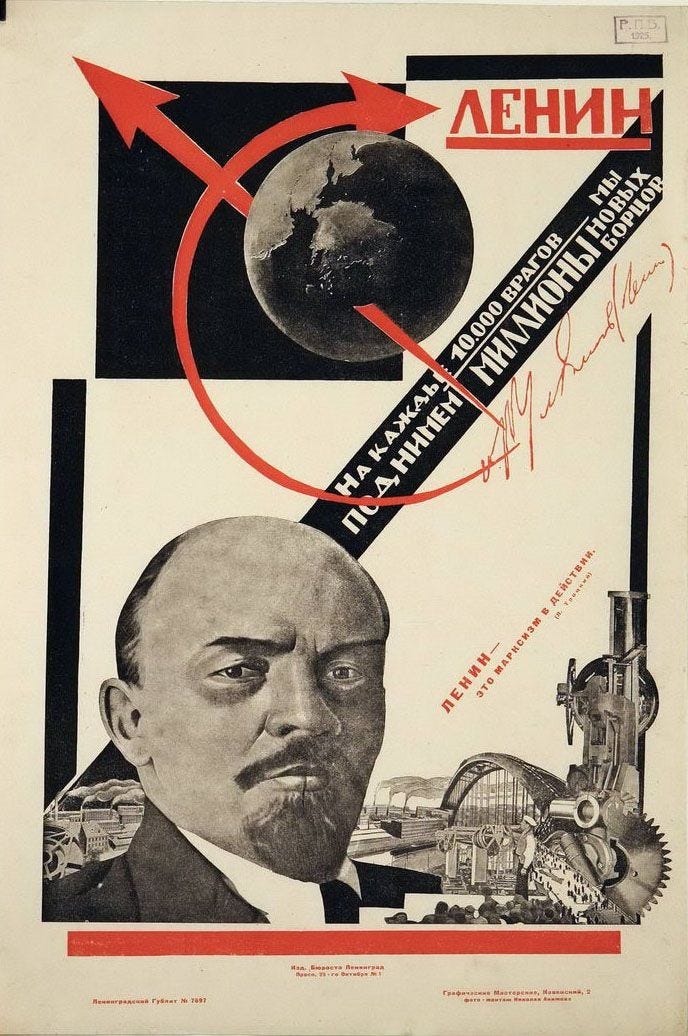
preach Vladmir preach~ featuring some sick propaganda from the USSR, they don't make em like this no more
(repurposed from an essay I had to submit for my comparative international studies class)
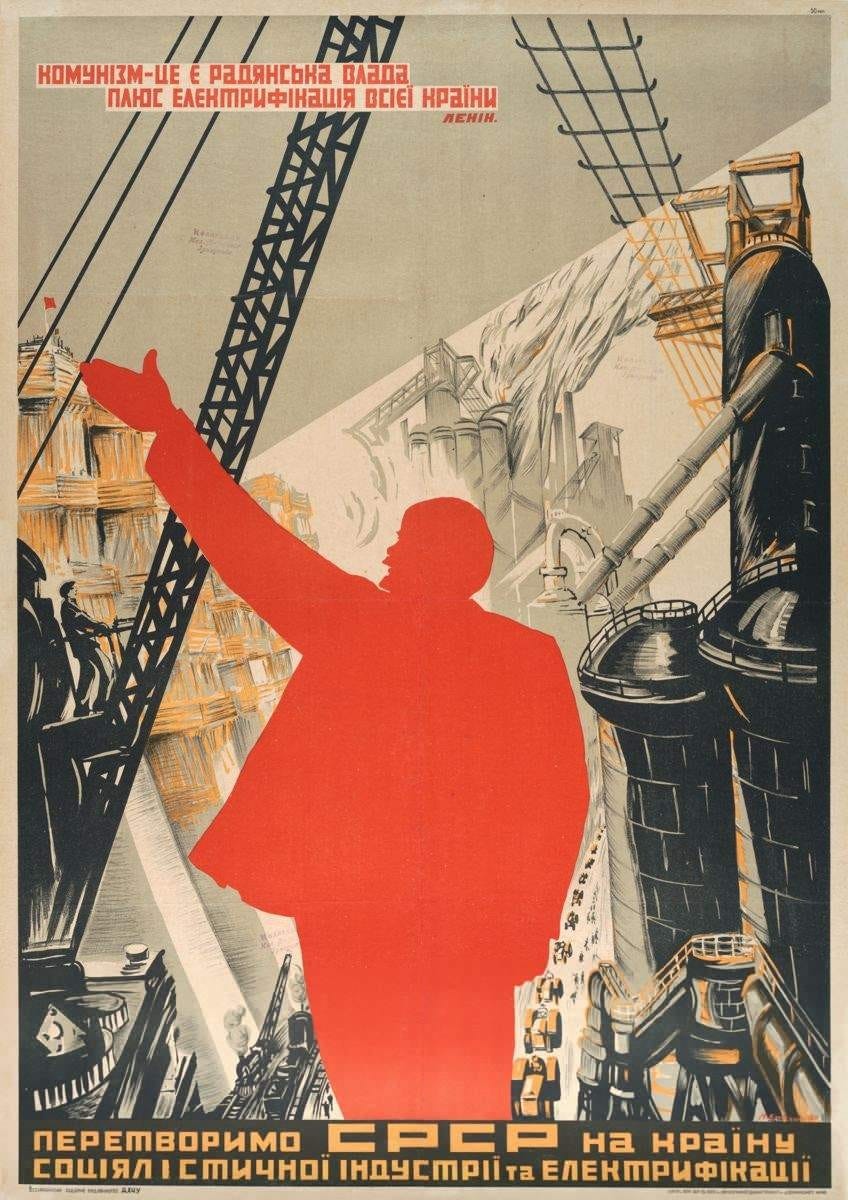
Lenin’s Imperialism, the Highest Stage of Capitalism (1916) was written more than a century ago in the midst of the first World War (“an imperialist war… to decide whether the British or German group of financial plunderers is to receive the most booty,” p 5) but should still be essential reading for anyone trying to understand the capitalist world today, especially now as we sit at a morbid transitional period with a US hegemony in violent decline. Lenin’s theory examines exactly what it is about capitalism that makes imperialism not just inevitable, but structurally necessary for the capitalist system as a whole to survive—tldr; you always have to grow your profits, bigger this year than the last, until finally one day you realize there’s no more growth to exploit within your own borders. Below, I’ll provide a brief summary of the exact mechanisms of imperialism that Lenin outlines, then apply those concepts to understand the evolution of US imperialism through its formalization in the post-WWII order and aim to dissect the its structural logic and trace the ways in which the form has morphed with every punctuating crisis.
Why is imperialism
Lenin’s key contribution is in exposing imperialism as the natural conclusion of the capitalist system driven by its own economic dynamics. He identifies five features of this stage: the dominance of monopolies and finance capital; the export of capital over the export of commodities; the division of the world among the international trusts; and the division of all territories of the globe among the biggest capitalist powers (p 67).
Europe entered into this final stage at the beginning of the twentieth century. Lenin pinpoints the economic crisis of 1873 (now known as the “Long Depression”) as the breaking point of the free competition stage of capitalism. Cartels began to develop in the decades following the crisis, which then eventually became the foundations of the whole of economic life by 1900, then fully accelerated into monopolies during the subsequent financial crisis of 1907. When the markets are dominated by cartels, the terms of sale, dates of payment, etc. are agreed upon and the profit is divided among themselves and their various enterprises.
At this stage, banks also consolidated from simple intermediaries to powerful monopolies: “an increasing proportion of capital in industry …are employed only through the medium of the banks, which… represent the owners of the capital (p 33).” These monopoly banks became the command centers of the economy as it had at its disposal the capital of all the capitalists—and through transforming inactive capital into investments to ensure it continues to yield profit, banks also commanded the larger part of the means of production and raw material sources.
In advanced nations, capitalism reaches a point of “overripeness” where domestic investment opportunities are exhausted (owing to the limiting purchasing power of the impoverished masses which capitalists have no interest in uplifting over chasing profit), driving capital to hunt returns in “backward” countries where scarce capital, cheap land, low wages, and underpriced raw materials yield high profit rates (p 45). The transition to monopoly capitalism and finance capital is thus directly linked to an intensification of colonial policy, driven by the need for profitable investment opportunities for exported capital as well as the continued need for raw material and markets. However, as the world’s territories had been almost completely partitioned among major capitalist powers by the early 20th century, and thus leaving only redivision as path for expansion, this dynamic inevitably resulted in rivalry among the powers—and set the historical stage for WWI, the imperial conflict that formed the immediate context of Lenin’s writing, and which foreshadowed the enduring logic of imperialism in the post-WWII era.
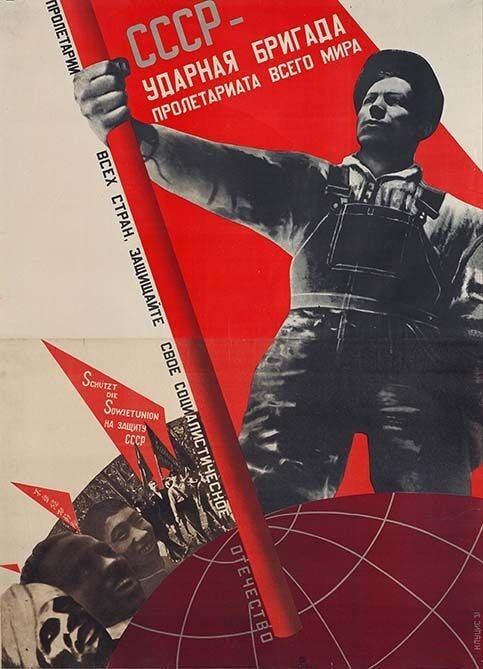
Even as the historical forms of imperialism continued to evolve throughout the 20th century, Lenin astute logic of the foundational mechanisms of capitalism endured. In this section, his framework is applied to the phases of US imperialism post-WWII through its various transformations to understand the advent of neocolonialism, the rise of the middle class, neoliberalism, and measure its relevance to the current day.
The good old days of the USA
Writing within the historical context of early 20th-century European colonialism, Lenin framed capital’s drive for global expansion exclusively through the lens of formal territorial empire, the dominant imperial form of his era. But because his argument focused on the structural purpose of colonies in capitalist systems, it applies just as well even in the decades following WWII, when formal colonialism gave way to neocolonialism. The global surge of national liberation movements against war-weakened imperialist powers and eventually lead to them reluctantly—but not without great violence—relinquishing their territories. However, the colonial dynamics were kept in place. The previously colonized countries, although now legally sovereign in this era, retained the same function as cheap sources of extraction and destinations for surplus capital. The infamous “banana republics” of Central and South America served this function in postwar US imperialism. If anything departs from Lenin’s original analysis, it is that multinational corporations are the main actors of colonial expansion rather than the nation state, whose military is brought in only when expansion meets meaningful political resistance.
Lenin may have underestimated the possibility of which a permanently “bribed” proletariat class could form. During the American golden age of the 1950-60s, Americans enjoyed unprecedented levels of domestic prosperity and living standards thanks not only to the Latin American neocolonies serving as destination for US surplus capital, but also a “Fordist” economic boom of mass production and mass consumption. This was the beginnings of the middle class; monopoly capitalist superprofits were so great that they came back to the workers in the form of high wages, and technology made production so cheap that those workers could become the capitalists’ own consumers. While Lenin does acknowledge the possibility of such a class forming, noting “high monopoly profits by the capitalists makes it economic possible for them to bribe certain sections of the workers to the side of the bourgeoisie (p 94),” he characterizes this “opportunism” as an unstable and temporary state for only a certain strata of the proletariat. What he didn’t foresee was the extent to which such a class could be made permanent, due to the absurd extent of superprofits and the will of capitalists to eventually use the proceeds to raise the living standards of the masses.
The ‘what even is money’ era
After the oil shocks of 1973, global capitalism underwent a total restructuring, moving from industrial capitalism to a deeply financialized, neoliberal variant. Lenin had already observed the domination of finance capital at the turn of the 20th century, anticipating some core features of neoliberal global capitalism, especially the growing power of banks and the global mobility of capital and the political coordination of capital across borders. He warned against the dangers of financial oligarchy, which is characterized as a domination of industrial production by finance capital. Finance in neoliberalism, however, came to surpass the domination of industry (this kind of oligarchy was already established in the postwar imperial expansion period) replaced capital exports with financial exports (debt) as the primary method of imperialism.
By the 1970s, easy neocolonial frontiers were exhausted, leaving only behemoth, resilient territories (Iran, China) that were too costly for the US to attempt to subjugate. When OPEC, a monopolist association by Lenin’s definition, embargoed its oil, the big capitalist economies already under strain due to its unsustainable superprofit structure spiraled into crisis. As was the pattern with past economic crises, capitalism was catalyzed into its next phase. The structure was overhauled: Reaganomics and free-market austerity regained profits by cutting into the “bribes” of the middle class and siphoning it upwards, all while the Volcker Shock brought on mass unemployment. The dollar was unpegged from gold, removing all barriers to capital mobility and therefore creating the conditions for finance capital to become the primary tool for maintaining neocolonial dependencies. Rather than costly industrial capital, IMF debt regimes and structural adjustment programs entrapped the Global South. Thus here we see Lenin’s assertion of capitalism as inherently parasitic and decaying. Imperialism leads to an immense accumulation of money capital in a few countries, resulting in the extraordinary growth of a class of “rentiers” that live by “clipping coupons” and take no part in productive enterprise (p 93).
Today’s doomerism
The 2008 crisis, which came out of highly leveraged, interconnected financial institutions and speculative accumulation, stands as the logical endpoint of this financialized form of imperialism. Crucially, the Lenin’s original dynamics of finance capital foreshadow today’s global order: the simultaneous rise of the Global South and escalating aggression from U.S. imperialism. Lenin argued that while finance capital profits immensely from politically subjugating peripheral nations, it inadvertently grants those same regions the material means to pursue emancipation. This dynamic is clearly visible in the offshoring of manufacturing to China, which transformed the country into a global industrial powerhouse. As Lenin further underscored, such moves toward economic independence and self-sufficiency directly undermine imperial capital’s most lucrative spheres of exploitation. In response, dominant imperial powers are compelled to ramp up military and geopolitical pressure to preserve their hierarchical control—a pattern that continues to define contemporary U.S. strategic behavior and sets the stage for the concluding analysis of Lenin’s enduring relevance today.
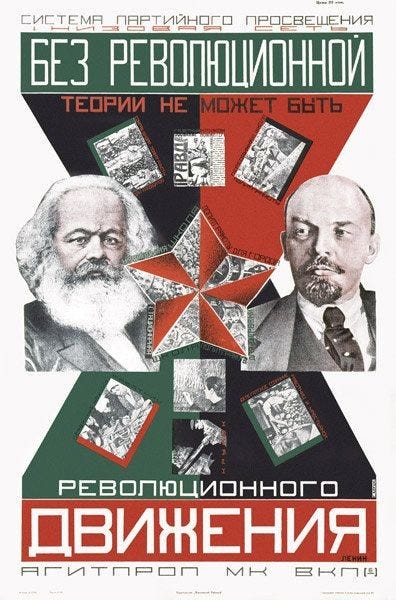
Lenin’s Imperialism remains indispensable for unpacking capitalism’s evolution into hegemonic U.S. dominance and its ongoing fragmentation. True to his maxim that imperialism marks the eve of proletarian social revolution, anticapitalist upheaval did emerge, only to be defeated and contained. Today, we witness the slow unravelling of unipolar U.S. hegemony amid a fragmenting multipolar order. While this may signal the decline of American-led imperial dominance, Lenin’s framework suggests new competing centers of capitalist power will likely reconfigure imperialism in fresh global forms yet to come.
P.S. Soviet constructivist design is cracked to the absolute 넘사벽 (unsurmountable wall of the fourth dimension) degree. Obsessed with this style. Unfortunate the modern examples are Target interior deco slop, politically toothless—let’s bring it back guys, the USSR had it